Tuesday, March 10, 2009

Hear this!...we failed.


In continuation from my blog, “The Ecological Price?” it appears the public hearing for the Skirt Mountain project was a failure. Activates are threatening to take Langford to court claiming the public hearing was flawed and counterproductive. The Victoria Island Community Forest Action says the hearing wasn’t properly conducted, and that some speakers were “interrupted and berated by the mayor”. Zoe Blunt a representative for VIC FAN is threatened to seek a B.C. Supreme Court judicial hearing to stop the bylaw enabling the development to occur. There is some mixed documentation of what actually occurred, as some members felt they were bullied by the mayor challenged their remarks and some council members said the mayor merely spoke to correct “inappropriate or incorrect” information.

The breakdown of this method is seems the people weren’t truly heard or felt they had a chance to fully vocalize their concerns with the project. On the other hand, people could merely be reacting this way as they did not receive what they wanted. A proper morderator should have been used, to ensure proper conversation was established. A moderator could have been used to make sure people arn't interupted and give them a chance to not feel intimiated when they spoke. So since this incident, people are demanding for a new public hearing to be ordered, but there has been no set date of if there will be another hearing.
The Skirt Mountasin project will cost approximately $1.7 billion, and promised a public amenity package worth $26 million.

Exert from: Goldstream Gazette: Wed March.4/09, article “Activists demand new Skirt Mtn. public hearing”

The Ecological Price?


A public hearing was held in Langford, which heard citizens voice their concerns about the Skirt Mountain 2,800 unit residential project. Many citizens wished to convey their issues about the loss of ecosystem through the development of this residential project, which ultimately will impact the native animal’s habitat. The developers in turn wanted to reach a compromise with the citizens promising to dedicate 40% as open space. This is where the concern and issue mostly arise, as citizens felt that this was not enough, and by not creating a larger open space this in turn will greatly affect natural flora and fauna

So the public hearing was done for citizens to gather together in a unified manner to voice their concerns and plans they wish to accomplish. Many different people from all walks of life had their chance to speak and most importantly were heard. This is a good form of community participation which was done in a beneficial manner, as the citizens took part and fell like they could be heard

Exert from: Goldstream Gazette: Friday, February.27/09, article “South Skirt Project gets Council nod”

Thursday, March 5, 2009

Victoria Vital Signs


In the Philanthropy section of the Goldstream Gazette indicates a survey is being done for those people who decide to donate to a charity, and would like to know if their donation is going to have an impact or not. Problem is there are countless charities out there, so which one do you support? Which one would gain the most from your donation? This survey and report is to help address these concerns. That’s where the program Vital Signs comes in. It’s used as a measure to identify what people may not know and give proper acknowledge meant to the issues that need it. Vital Signs gives citizens intelligence on social issues, assisting in identifying challenges the community faces and clarifying priorities.

Factors determine the indicators published in Vital Signs each year:
-The first part of the national initiative, all participating community foundations publishes Vital Signs report in 2009 agree to publish one common indicator for cross-country comparison.
-Second, the Foundation calls upon the citizens of the region to get involved by participating in a survey which will be launched online (http://www.victoriafoundation.bc.ca/), this helps determine which indicators will be published in the report. This part of the process enables the public to have important input about where they feel opportunities and challenges exist in the region
-The third factor that determines which indicators are published is data-availability-whether or not the data exists to report on the suggested indicator

This is a helpful tool to address concerns individuals in a public may have, as “Victoria is our community and Vital Signs is our report card”

Exert from: Goldstream Gazette: Fri Feb.27/09, article “Foundation survey helps identify community needs”

Sunday, February 22, 2009

Students growing gardens


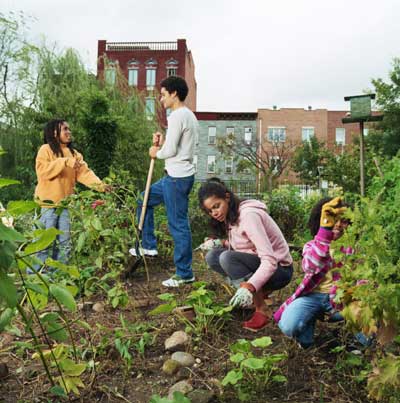
In an article written by Amy Dove, outlines that teachers from the WestShore Teaching Garden are providing hands-on education in a small-scale agriculture system. This course is teaching basic skills upon which many years ago our society needed to be able to survive and thrive off of the land. Students are being educated gaining firsthand experience working with the land; even carpentry students have built planter boxes, a compost bin and a bench for the garden. Regular students from all over will take part in this community garden, and even take field trips to local farms to learn about pruning, preserving and other value-added products to make farming viable.

This course all though small is encouraging community participation through various facets from regular citizens, students and even business which are donating products and funds to help the gardens growth. The article didn’t say if the course was mandatory, but if it was voluntary you run the risk of trying to find people to continuously upkeep the garden, but community donations have helped the garden to flourish.

Exert from: Goldstream Gazette: Wed Feb.11/09, article “Garden to Cultivate green thumbs, business skills”

Friday, February 20, 2009

CRD involving the public


In continuation to my “Stop asking questions, you’re confusing me” blog, Judy Brown came into our class to discuss the CRD’s core liquid water plan, indicating the problems and goals this project is planning. As I mentioned in a previous blog, they weren’t involving the public in the discussions, but from Judy’s talk it seems there are ready now to begin talks and getting the word out on the project. This of course is an excellent move to do, as the more people feel their involved in a project the more they will participate. One could say it took them to long as they do need to talk to people about this issue and begin community engagement.

Problem with community engagement is most people don’t think long term, and the perceptions of wastewater can be outdated or skewed. So crossing these borders is a difficult task many municipalities and organizations are in the middle of.

Options to encourage community engagement (ideas generated from Royal Royal classmates):
· Instead of inviting people to take part, go directly to them
· Radio spot to get some of the younger listeners
· Talk to younger people in school, as school’s are a means to reach parents
· Go to pharmacies or talk to doctors
· Enlist some Co-op students that go door to door to spread the word
· Add information on a community bulletin board, and if it is hand written it can make it more personal
· Use social networks such as facebook to talk to people and spread the word.

Exert: Judy Brown, Community lecture at Royal Roads University (Feb.20.09)

Tuesday, February 17, 2009

Rebel Yell


In continuation to my “Stop asking questions, you’re confusing me” blog, it seems as of late the city of Colwood is withdrawing from the massive sewage treatment project discussed earlier. It appears the city may be in talks to develop its own plant, as the mayor believes it would cost taxpayers less to have private developers build communities similar to Victoria’s own Dockside Green, which treats its own sewage waste rather than pay a share of the regional system. There is even talks that Colwood may even leave CRD as a whole, and a municipality leaving an organization like the CRD is not a common occurrence and brings up many questions if a municipality should have the right to or not.

Now do you blame Colwood for their actions? Colwood appears to trying to branch on its own and form its own entity and exist outside of their pre-existing community with the CRD. The mayor of Colwood is serious about this detachment and feels the costs associated with being part of the CRD are not adequate with the benefits. Whether this is the right action or not is to be determined. If I were the CRD, I would potentially be worried that other municipalities may follow suit and leave the CRD and branch out making their own individualities. Nothing is concrete yet, so we will have to see how this develops

Exert from: Times Colonist: Fri Feb.14/09, article “Colwood could pull out of CRD sewage project”

Saturday, February 7, 2009

Is economic equality possible?


In the world today there are many aspects of inequality between nations in comparisons to poverty, education, crime, etc. Some nations don’t have the luxury of others may have, which can potentially create animosity between the two nations. Now is it possible to improve a nation’s situation and create a more equal landscape for all? In theory yes it is possible; but in reality it most likely won’t occur…or for now at least. Generally a society looks at how much you have and what you do as a way to measure success. So the more you have the more successful and important you are. This mindset is not exactly sustainable, but this continues to be a common mentality in society. Even a wealthy nation can have economic inequality, as currently in the United States and even in Canada the gap between the lower classes and upper class is increasing with each year.

To potentially compensate for this inequality, social capital should be improved.. Social capital can involve involvement of community actives, and creates connections, trust and safety, create levels of tolerance of diversity and most importantly improve the value of life. Like I mentioned above in theory it’s possible to improve inequality, but to create a complete equality system is not likely. In today’s society getting people to participate in activities is increasingly more difficult due to as a whole were becoming more “coach potatoes” so this makes it hard for a nation to increase ones social capital. In the future it may be possible, but the mindset of the world needs to be changed from having more is good to a more sustainable belief.

Exert: Chris Ling, Community lecture at Royal Roads University (Week 5)