Tuesday, March 10, 2009

Hear this!...we failed.


In continuation from my blog, “The Ecological Price?” it appears the public hearing for the Skirt Mountain project was a failure. Activates are threatening to take Langford to court claiming the public hearing was flawed and counterproductive. The Victoria Island Community Forest Action says the hearing wasn’t properly conducted, and that some speakers were “interrupted and berated by the mayor”. Zoe Blunt a representative for VIC FAN is threatened to seek a B.C. Supreme Court judicial hearing to stop the bylaw enabling the development to occur. There is some mixed documentation of what actually occurred, as some members felt they were bullied by the mayor challenged their remarks and some council members said the mayor merely spoke to correct “inappropriate or incorrect” information.

The breakdown of this method is seems the people weren’t truly heard or felt they had a chance to fully vocalize their concerns with the project. On the other hand, people could merely be reacting this way as they did not receive what they wanted. A proper morderator should have been used, to ensure proper conversation was established. A moderator could have been used to make sure people arn't interupted and give them a chance to not feel intimiated when they spoke. So since this incident, people are demanding for a new public hearing to be ordered, but there has been no set date of if there will be another hearing.
The Skirt Mountasin project will cost approximately $1.7 billion, and promised a public amenity package worth $26 million.

Exert from: Goldstream Gazette: Wed March.4/09, article “Activists demand new Skirt Mtn. public hearing”

The Ecological Price?


A public hearing was held in Langford, which heard citizens voice their concerns about the Skirt Mountain 2,800 unit residential project. Many citizens wished to convey their issues about the loss of ecosystem through the development of this residential project, which ultimately will impact the native animal’s habitat. The developers in turn wanted to reach a compromise with the citizens promising to dedicate 40% as open space. This is where the concern and issue mostly arise, as citizens felt that this was not enough, and by not creating a larger open space this in turn will greatly affect natural flora and fauna

So the public hearing was done for citizens to gather together in a unified manner to voice their concerns and plans they wish to accomplish. Many different people from all walks of life had their chance to speak and most importantly were heard. This is a good form of community participation which was done in a beneficial manner, as the citizens took part and fell like they could be heard

Exert from: Goldstream Gazette: Friday, February.27/09, article “South Skirt Project gets Council nod”

Thursday, March 5, 2009

Victoria Vital Signs


In the Philanthropy section of the Goldstream Gazette indicates a survey is being done for those people who decide to donate to a charity, and would like to know if their donation is going to have an impact or not. Problem is there are countless charities out there, so which one do you support? Which one would gain the most from your donation? This survey and report is to help address these concerns. That’s where the program Vital Signs comes in. It’s used as a measure to identify what people may not know and give proper acknowledge meant to the issues that need it. Vital Signs gives citizens intelligence on social issues, assisting in identifying challenges the community faces and clarifying priorities.

Factors determine the indicators published in Vital Signs each year:
-The first part of the national initiative, all participating community foundations publishes Vital Signs report in 2009 agree to publish one common indicator for cross-country comparison.
-Second, the Foundation calls upon the citizens of the region to get involved by participating in a survey which will be launched online (http://www.victoriafoundation.bc.ca/), this helps determine which indicators will be published in the report. This part of the process enables the public to have important input about where they feel opportunities and challenges exist in the region
-The third factor that determines which indicators are published is data-availability-whether or not the data exists to report on the suggested indicator

This is a helpful tool to address concerns individuals in a public may have, as “Victoria is our community and Vital Signs is our report card”

Exert from: Goldstream Gazette: Fri Feb.27/09, article “Foundation survey helps identify community needs”

Sunday, February 22, 2009

Students growing gardens


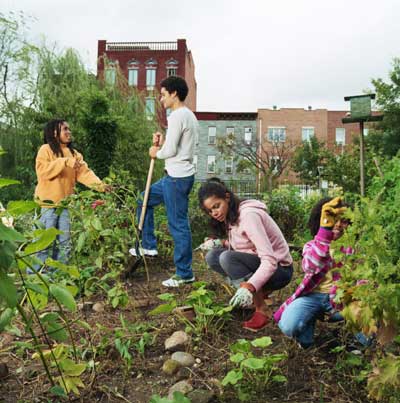
In an article written by Amy Dove, outlines that teachers from the WestShore Teaching Garden are providing hands-on education in a small-scale agriculture system. This course is teaching basic skills upon which many years ago our society needed to be able to survive and thrive off of the land. Students are being educated gaining firsthand experience working with the land; even carpentry students have built planter boxes, a compost bin and a bench for the garden. Regular students from all over will take part in this community garden, and even take field trips to local farms to learn about pruning, preserving and other value-added products to make farming viable.

This course all though small is encouraging community participation through various facets from regular citizens, students and even business which are donating products and funds to help the gardens growth. The article didn’t say if the course was mandatory, but if it was voluntary you run the risk of trying to find people to continuously upkeep the garden, but community donations have helped the garden to flourish.

Exert from: Goldstream Gazette: Wed Feb.11/09, article “Garden to Cultivate green thumbs, business skills”

Friday, February 20, 2009

CRD involving the public


In continuation to my “Stop asking questions, you’re confusing me” blog, Judy Brown came into our class to discuss the CRD’s core liquid water plan, indicating the problems and goals this project is planning. As I mentioned in a previous blog, they weren’t involving the public in the discussions, but from Judy’s talk it seems there are ready now to begin talks and getting the word out on the project. This of course is an excellent move to do, as the more people feel their involved in a project the more they will participate. One could say it took them to long as they do need to talk to people about this issue and begin community engagement.

Problem with community engagement is most people don’t think long term, and the perceptions of wastewater can be outdated or skewed. So crossing these borders is a difficult task many municipalities and organizations are in the middle of.

Options to encourage community engagement (ideas generated from Royal Royal classmates):
· Instead of inviting people to take part, go directly to them
· Radio spot to get some of the younger listeners
· Talk to younger people in school, as school’s are a means to reach parents
· Go to pharmacies or talk to doctors
· Enlist some Co-op students that go door to door to spread the word
· Add information on a community bulletin board, and if it is hand written it can make it more personal
· Use social networks such as facebook to talk to people and spread the word.

Exert: Judy Brown, Community lecture at Royal Roads University (Feb.20.09)

Tuesday, February 17, 2009

Rebel Yell


In continuation to my “Stop asking questions, you’re confusing me” blog, it seems as of late the city of Colwood is withdrawing from the massive sewage treatment project discussed earlier. It appears the city may be in talks to develop its own plant, as the mayor believes it would cost taxpayers less to have private developers build communities similar to Victoria’s own Dockside Green, which treats its own sewage waste rather than pay a share of the regional system. There is even talks that Colwood may even leave CRD as a whole, and a municipality leaving an organization like the CRD is not a common occurrence and brings up many questions if a municipality should have the right to or not.

Now do you blame Colwood for their actions? Colwood appears to trying to branch on its own and form its own entity and exist outside of their pre-existing community with the CRD. The mayor of Colwood is serious about this detachment and feels the costs associated with being part of the CRD are not adequate with the benefits. Whether this is the right action or not is to be determined. If I were the CRD, I would potentially be worried that other municipalities may follow suit and leave the CRD and branch out making their own individualities. Nothing is concrete yet, so we will have to see how this develops

Exert from: Times Colonist: Fri Feb.14/09, article “Colwood could pull out of CRD sewage project”

Saturday, February 7, 2009

Is economic equality possible?


In the world today there are many aspects of inequality between nations in comparisons to poverty, education, crime, etc. Some nations don’t have the luxury of others may have, which can potentially create animosity between the two nations. Now is it possible to improve a nation’s situation and create a more equal landscape for all? In theory yes it is possible; but in reality it most likely won’t occur…or for now at least. Generally a society looks at how much you have and what you do as a way to measure success. So the more you have the more successful and important you are. This mindset is not exactly sustainable, but this continues to be a common mentality in society. Even a wealthy nation can have economic inequality, as currently in the United States and even in Canada the gap between the lower classes and upper class is increasing with each year.

To potentially compensate for this inequality, social capital should be improved.. Social capital can involve involvement of community actives, and creates connections, trust and safety, create levels of tolerance of diversity and most importantly improve the value of life. Like I mentioned above in theory it’s possible to improve inequality, but to create a complete equality system is not likely. In today’s society getting people to participate in activities is increasingly more difficult due to as a whole were becoming more “coach potatoes” so this makes it hard for a nation to increase ones social capital. In the future it may be possible, but the mindset of the world needs to be changed from having more is good to a more sustainable belief.

Exert: Chris Ling, Community lecture at Royal Roads University (Week 5)

Friday, February 6, 2009

Old Growth Forests

British Columbia is home to many ancient forests that even stretch out along its major cities. These old growth forests support a unique ecosystem of trees, plants and animals. In a more urban setting it is all the more important to protect the old trees because the ecosystems have already been compromised by development. Due to the logging industry these old growth forests are at risk and even those some of these trees are located on federal, provincial and private land, they aren’t protected by provincial legislation. In order to compensate or that local governments and individual land owners are doing their part to ensure the trees are protected, such as some municipalities, like Metchosin and Victoria, have bylaws protecting trees on city and private land. Even landowners are doing their part, by placing covenants on land or donating it to land conservancies.

Many communities are banding together in order to halt the removal of the old growth trees starting committees and petitions to help protect their ecosystem. This is a positive movement as harvesting old growth trees is not sustainable and can dramatically impact the natural and social lifestyles of the surrounding areas. It’s nice to see communities banding together in attempt to help conserve their natural environment.

Exert from:
Dove, A. (2009, February 5). Last of the Old Giants. Retrieved February 5, 2009, from
http://www.bclocalnews.com/vancouver_island_south/goldstreamgazette/news/39113964.html

Monday, February 2, 2009

Add me...if you want to be my friend


Networks are a form of communication people use to contact a variety of individuals using their own network to spread into others in attempt to reach a broad market. You know the old saying, “a friend of a friend” is essentially a quote relating to how a network works. If you tell one person then they tell another, and so on and so forth till the message has spread through a variety of people. Depending on how large your network is a means to spread a great deal of information to countless people even in a short period of time. If you can change one person to perhaps live a more sustainable way, they may change another and so on and so forth as the individuals talk to other people about what and how they have altered their way of life.
My father and brother both are firefighters working for the municipality in Barrie, so when I had to complete an 8 month co-op for school I used their network to help me get a job with the wastewater treatment. Since they work in the municipality, they knew people who I could contact to help get my feet in the door and to provide me an opportunity that I may not have had if I didn’t have access to that network. Are networks unfair? They can be, but having a broad network can definitely take you places you may need to go and can use them to help change others or use them for your own personal benefit.

Exert: Chris Ling, Community lecture at Royal Roads University (Week 4)

Thursday, January 29, 2009

Community…what is it?

Community is a word that is often used, but very vaguely defined. What is a community? How big is a community? What does it mean to you? If you ask different people they could give different ideas to what a community is and what it means to them. For instance a community can refer to a group of people living in a particular local area or having shared ethnic, cultural or religious characteristics. This implies those who live inside the community are similar to each other and different from others. These differences can create a bond between some people and excludes others, which is fault certain communities can have. To me a community is a group of people who can gather together and interact with each other, which in turn help gain knowledge from each other by sharing one’s experience.

If “sharing” is occurring, the more a community will be united and the healthier it can be. If a variety of people work together in unison, this can develop a sustainable community, since each individual can learn from another, just because of their different backgrounds. To me a community isn’t just a select group of people with shared characteristics, but a cosmopolitan amount of people working together for a common purpose.
Exert: Chris Ling, Community lecture at Royal Roads University

Monday, January 26, 2009

At this fair, there’s no candy


On January 24, 2009, View Royal had a Sustainability Fair, which wanted to encourage citizens to rethink their choices they make to live a more environmentally friendly way. What I like about how they planned this fair is they made the parking very limited so people had to think about how they would get there and how they choose the transportation. As Monique Booth, one of the volunteers of the fair suggested, “We are trying to encourage people to bus, bike or walk to the event.” Problem with this is it’s almost preaching to the choir, as most who do attend these sustainable idea events already have the mindset to live more sustainable. It’s a good idea, but not exactly effective as their audience already believes in the same thing they wish to address.

The fair was established last year, and was created to help resident’s access information on energy and conservation. They even made it family friendly, with face painting, puppet shows and more for the younger crowd. There are also door prizes focused on environmentally-friendly products. That I think is their best tactic, by teaching the youth and children about living sustainable now. Teaching future generations about living in a different way is far easier to do then trying to change older citizens who have grown accustomed to their way of life. I personally didn’t know about this fair until today, but would have liked to attend it just to see how effective it was, as the principle behind it is noble and it helps to encourage the community to participate in a more sustainable way. Hopefully this trend continues, and the community gets more involved with this type of action and people from all walks of like take part. Having people from different backgrounds can give different ideas and perspectives on their version of sustainable ideas, which in turn can potentially create a more uniformed vision.

Exert from: Dove, A. (2009, January 22). Green technologies, sustainable solutions on display in View Royal. Retrieved January 26, 2009, from http://www.bclocalnews.com/vancouver_island_south/goldstreamgazette/news/38170089.html

Sunday, January 25, 2009

Stop asking questions, you’re confusing me


In continuation to my “What’s that smell?....Success baby!” blog, it seems there is some discussions going on with the Capital Regional District (CRD) sewage treatment system. The districts’ core area liquid waste management committee has approved the first round of questions for an external review panel to answer questions and examine the districts options for sewage treatment. There are people who want to potentially enhance the current system and potentially draw from bio-gas, heat and water similar to what Mr.Grundy was planning on implementing with the Royal Roads system. It seems the questions proposed were too vague in the review helped last week and there is plans for additional questions to be adopted on Jan.28 that can possible ask questions about green house gas emissions.

Now it would seem from the article, citizens are not taking part in the discussion but organizations such as Sewage Treatment Action Group (STAG) and Responsible Sewage Treatment Victoria (RSTV) are the ones spear holding the discussions. Personally I would have encouraged the citizens to get involved with the discussions to even learn more about it and potentially add in what they want out of a possible new system rather then just these organizations, which may or may not have the same interests as the population. Also the more people better understand how something works, the more people are willing to work with and potentially improve it

Exert from: Goldstream Gazette: Wed Jan.21/09, article “CRD sewage questions prompt more questions”

Wednesday, January 21, 2009

Don't be a lazy student!

In an article written by Michele Vicente, she suggests it’s a positive thing for potential grads and for local organizations and businesses to work together in a uniform manner for a common goal. For instance the MBA learners at Royal Roads University must complete a real life consulting project in order to graduate. This is a beneficial tool to the students as it gives them the opportunity to showcase the knowledge they gained from the course and experience and apply it to the work field. Not only does the student benefit from this, but businesses and organizations get free, confidential advice and at least 360 hours of consulting time. This potentially can create and encourage a sustainable environment amongst the community as students from Royal Roads are generally encouraged to develop new techniques and look for more environmentally friendly ideas. With community planning, generally local “talent” is encouraged as this can create a positive mentality with the community rather than using outside talent which may create some animosity.

In the case of Cameron Angus, he conducted a review of WorkSafeBC’s compliance programs for employers with workers who sustain fatal workplace injuries. The research he did is being used as a basis for future initiatives that may change polices and businesses practices concerning how WorkSafeBC deals with employers who have workers sustaining fatal workplace injuries. He comments, “Hopefully, my project will ultimately help to reduce the number of people who die on the job every year,” So by encouraging students to begin to experience the work field, can help to build a better community relationship with the schooling institutions and with the business community. This is also a sustainable idea, as there will always be new students starting school and of course giving businesses the opportunity for free work is always a positive thing in their minds and of course…their bank wallets

Exert from:InRoads Community Report: Friday, June 20, 2008, article from “RRU Students can help local businesses”

What’s that smell?....Success baby!


Royal Roads University has been spending years expanding and modifying the campus to be a more sustainable community. Another step was taken to achieve this goal outlined by RRU associate vice-president and chief information officer, Steve Grundy. He had indicated that RRU has begun plans to potentially capture West Shore’s sewage and build a Waste and Energy Recovery Research Centre on campus. A facility like this can be used to generate heat and electricity from burning dry wood in a gasification system and treating wastewater, or sewage. This in turn can help the campus to go off the grid, and sell excess energy to nearby communities. Not only will this lower Royal Roads carbon footprint, but can also be an inspiration to other potential institutions willingly to go green. The bulk of that funding would be for infrastructure to treat the wastewater, which is estimated at $39 million so it’s still a long ways to go.

What’s also interesting with this research is it can provide students first-hand experience how new technologies work and helps to engage the students. The students then in turn can share the knowledge they gained from their experience and take it with them, and potentially spread it amongst their “network”. Also as mentioned above this plan can be used to inspire other institutes to follow suit, but it also help educate the greater community about sustainable initiatives. With building a wastewater plant amongst a community, this can create some animosities due to the NIMBY (not in my backyard) philosophy, so proper knowledge and training needs to be done in order to help keep the community knowledgeable and ease any of their concerns. As Mr.Grundy said “I am hoping people will see the university as part of the community, not hiding behind the walls that surround this campus,” Universities are amongst communities and working with a community with developing and implementation of ongoing projects can create a sense of pride and confidence in the community one lives in.

Exert from:
Dove, A. (2009, December 18). Royal Roads making bid for sewage treatment . Retrieved January 21, 2009, from http://www.bclocalnews.com/vancouver_island_south/goldstreamgazette/news/36392184.html

Sunday, January 11, 2009

The future is now?

As a society we spend a lot of time inside buildings, which generally is the reason for the high energy costs in many establishments with the cost of heating and cooling. In order to compensate for these high costs, certain residential communities have decided to try to limit their energy consumption using alternate approaches. For instance, Tony Smythe, the owner of DFS Technologies Inc. has developed a home automation system, which allows people to hook up several electronic devices in the home to one central location. Basically all your electronics, lights, etc. are hooked up to the computer and a person can adjust their settings by merely with a simple touch of a button.

This can help to reduce the carbon footprint for several areas, as people can learn to better conserve their energy as lights can be adjusted or simple turned off from just one location. Even the drapes can be hooked up and will open and close deepening on the temperature in the house, which can help with limiting the cost of heating and cooling. Any residential area can have this system installed, and it’s a common application in Victoria’s Dock-side Green housing and apartment locations. This is a simple yet effective method of limiting the carbon footprint done by housing communities as well as establishments.

Exert from: Goldstream Gazette: Wed Jan.7/09, article “Going automatic, going green”